
In this article, we’ll tell you everything there is to know about the Monstera adansonii plant.
Keep on reading to learn:
- Monstera adansonii care tips
- Why it’s an easy-to-grow houseplant
- Its natural environment and origins
And more!
Genus
The Monstera adansonii plant species belong to the Monstera genus. Monstera plants are among the most popular plants, and there are more than 30 accepted species in their respective genus.
The Monstera adansonii plant is one such species. In addition to the scientifically accepted Monstera species, the plants also show variation in leaf shape, color, and plant size, which increases their number of types to more than 100!
Common Names
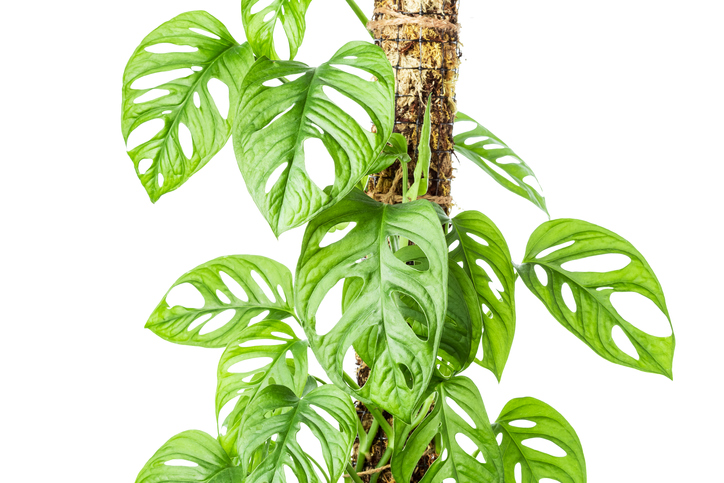
Like its sister plant, the Monstera deliciosa, the Monstera adansonii plant has several common names, owing to its unique physical features.
The Swiss cheese plant is arguably the most common name people call the adansonii plant. Monstera adansonii leaves have natural oval-shaped holes resembling Swiss cheese, hence the name.
Similarly, they’re also called the five holes plant since typical Monstera adansonii leaves have five holes, which can increase in number as the leaves begin to mature.
Another common name for the Monstera adansonii plant is the Monstera monkey mask.
It would help if you also remembered that its close relative, the Monstera deliciosa, is also called the Swiss cheese plant, which should not be confused with the Monstera adansonii.
Lastly, Monstera adansonii plants are also called love plants due to their distinctive, heart-shaped leaves.
Botanical Names
The botanical name for the Monstera monkey mask is Monstera adansonii. The word Monstera denotes the genus of the Swiss cheese plant, while the word adansonii refers to the species.
The Monstera adansonii plant belongs to the family Araceae. A plant belonging to the Araceae is commonly called an aroid.
There are many genera in the Araceae family, some resembling the Monstera plant, like the popular Split Leaf Philodendron.
Varieties of Monstera Adansonii Plant
Like its cousins Monstera deliciosa, the Monstera adansonii has several varieties, which differ in terms of variegation, leaf size, fenestration pattern, and plant growth.
The lovely hanging plant has eight popular varieties.
See Also: Monstera Types
Monstera Adansonii Variegata
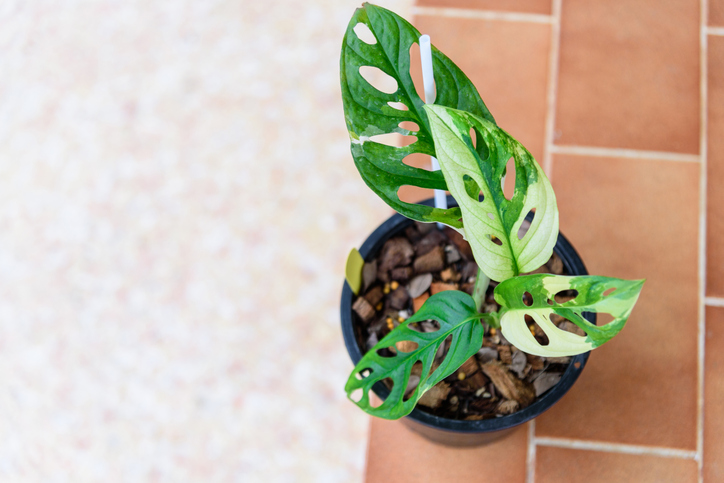
Variegation refers to members of the same plant species with a difference in color patterns, pigmentation, and distribution.
Consequently, this variegated variety boasts an attractive white patch on the otherwise green leaves due to a complete lack of chlorophyll production.
The vast, broad leaves with the white-colored patch are genetic anomalies and highly prized in the horticulturist world.
Monstera Adansonii Archipelago
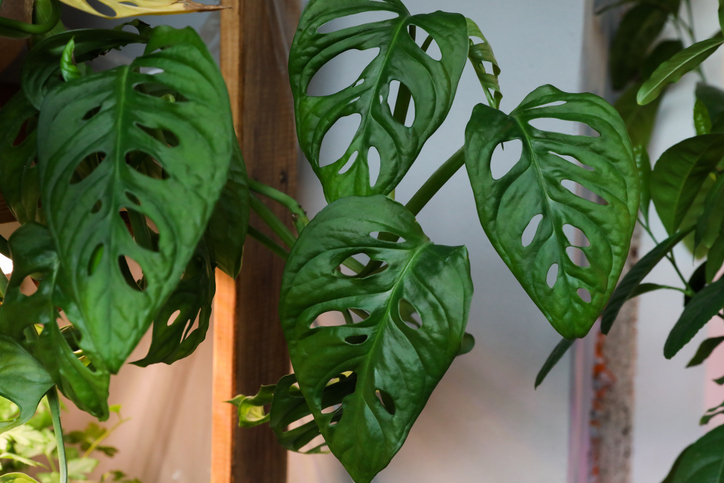
The Monstera adansonii archipelago is one of the most popular indoor plants and boasts more variegation than the true Variegata mentioned above.
Unlike other plants of the Adansonii variety, these have beautiful leaves with a natural color combination of green, yellow, and white hues.
These shades can even give rise to vibrant yellow leaves, although these should not be confused with the dull yellow leaves undergoing chlorosis, a plant care issue.
Monstera Adansonii Laniata
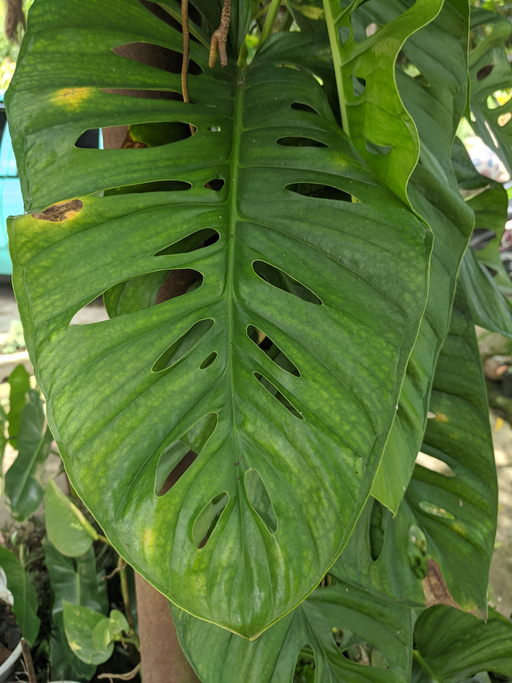
The Laniata is a subspecies of the Monstera adansonii plant. For the average houseplant owner, they can pass as a normal Monstera adansonii because these indoor plants are nearly the same in shape and size.
However, there’s one key difference if you pay close attention. The Monstera adansonii leaves are a darker shade of green and with a leathery texture.
On the other hand, the Laniata plant has glossy green leaves. You can even see a white sheen in the right lighting.
Monstera Lechleriana Schott
The Lechleriana Schott has considerably bigger foliage than the Monstera adansonii.
Although both plants have similarly shaped leaves, they are more elongated in the Lechleriana Schott.
Furthermore, this variety spreads out laterally more than its Adansonii variant and occupies more space.
Monstera Obliqua
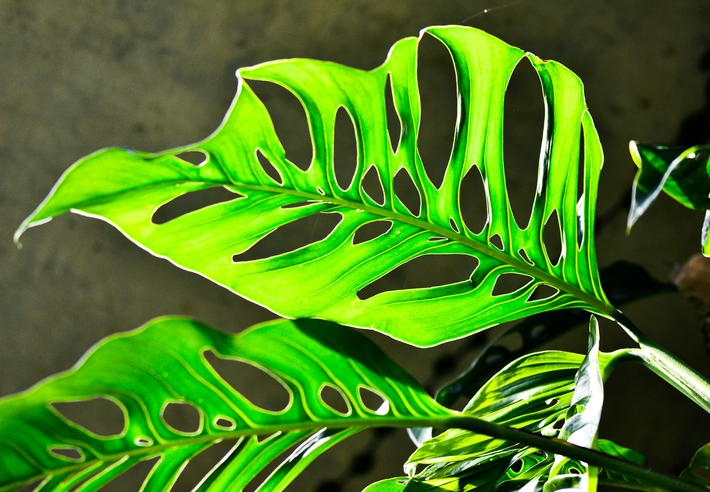
Monstera obliqua plants are markedly different from other plants of the Adansonii variety.
The leaves of the Monstera obliqua plants have the largest and most fenestrations out of all other varieties.
In fact, the larger holes are held together by extremely thin “string-like” leaves, giving the plants an attractive look!
Monstera Adansonii Friedrichsthalii
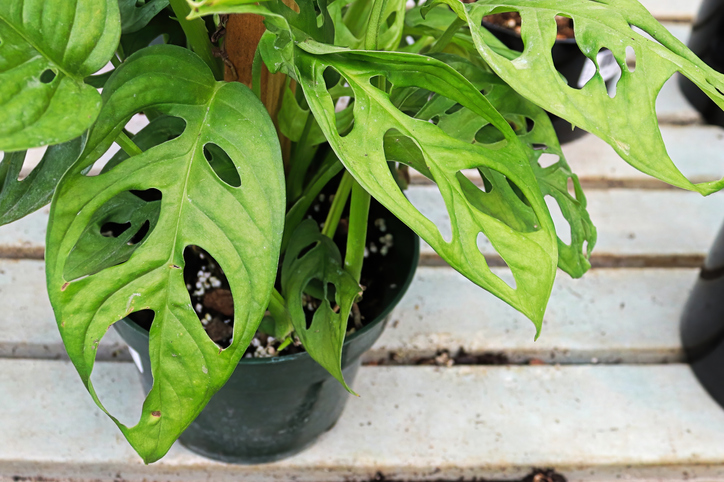
The Friedrichsthalii is not much different from the Monstera adansonii plants. Typically, its leaves are a smidge bigger and longer while having a lighter shade of green.
Monstera Acuminata
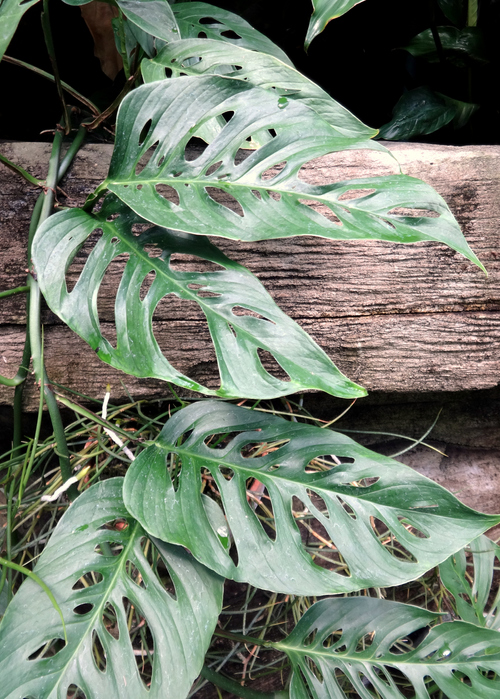
Acuminata plants are quite rare, even among the rare Monstera plants. Monstera acuminata leaves have fewer fenestrations, and the leaf shape also tapers to a narrow point, giving them a more ovate than heart-shaped look.
Additionally, the foliage is neither glossy nor leathery. Instead, it has a smooth, velvety feel to it.
Monstera Epipremnoides
The epipremnoides are similar to obliqua plants due to their large and frequent fenestrations.
However, the plant is also several shades lighter in color, which sets it apart from all other varieties!
Origin Of Monstera Adansonii
Monstera adansonii plants originate in Central and South America and are found as far north as Mexico.
These plants love humid conditions, which dominate the climate of Central and South America.
These jungle plants are perennials that grow deep in tropical rainforests, relying on bright indirect light penetrating the forest’s thick canopy.
As a result, the Swiss cheese plants have evolved to adapt to their natural habitat.
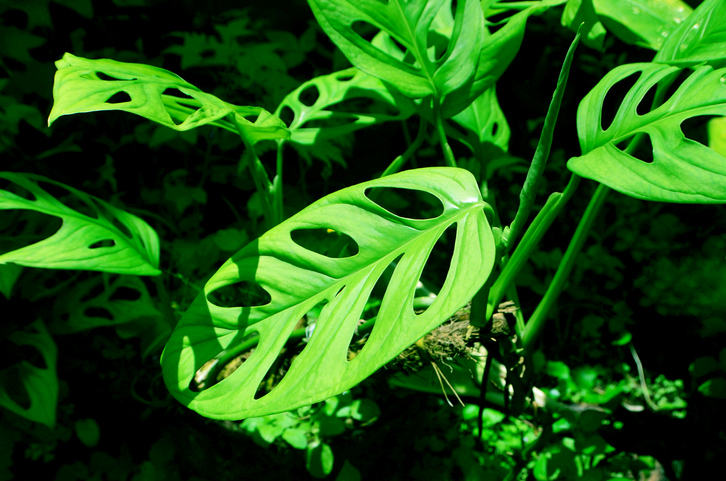
For starters, the Monstera adansonii plant loves to climb. The vining habit is retained through the development of aerial roots, which help the plant attach to trees.
The Swiss cheese vine grows vertically to compete for more indirect light.
Second, the fenestrations in the Swiss cheese plant aren’t just for show. These result from natural selection, having evolved to serve an important purpose – withstanding high winds.
Tropical rainforests can experience high winds and heavy rainfall, damaging these fragile flowering plants.
As such, the holes are designed to help the plant survive these weather conditions without getting damaged.
Lastly, the heart shape of the leaves is also a unique adaptation. All plants need sunlight for photosynthesis. Unlike other plants, the Monstera adansonii has many holes in its leaves, which prevent efficient food production.
Therefore, the plant evolved to develop broad heart-shaped leaves to maximize sunlight absorption, even in indirect light.
Care Guidelines
Like its cousins, the Monstera deliciosa plants, the Monstera adansonii plant care tips revolve around light, watering, humidity, and fertilizing requirements.
Swiss cheese plant care is very easy, and these plants thrive with just a little love and attention. They’re particularly fond of humid environments.
Light
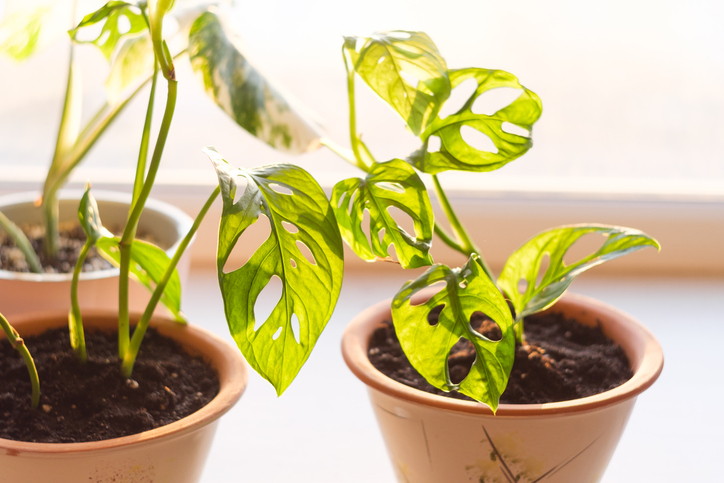
Since the Monstera adansonii grows in jungles, it doesn’t demand any excessive light requirements.
In fact, the Monstera adansonii only requires bright indirect light. It will grow quite well with indirect sunlight, so you can place it by a north or south-facing window.
Using a hanging basket is ideal since the Swiss cheese vine loves vertical growth. Hanging baskets also make it easier to adjust the amount of light.
On the other hand, direct sunlight can be detrimental to your Monstera adansonii. While you can grow it outdoors and a little direct sunlight won’t harm the plant, prolonged exposure will quickly burn the foliage, causing a condition known as sun-scald.
Therefore, place them at least six feet away from a sunny window indoors and in a shady spot away from the direct sun outdoors.
Watering
Like other plants growing in tropical habitats, the Swiss cheese plants love moist soil more than thorough watering.
It can be tricky gauging the difference, and this is where most fail in Monstera adansonii care.
You can gauge watering needs by testing the top two inches of the soil. If it is cool and moist, you won’t need to water it for another day or two.
However, if the soil is dry, it will require watering. Typically, the Swiss cheese plant requires a thorough watering once every week., although an arid climate will require it twice a week.
Similarly, plants in the growing season will also require frequent watering, whether growing under indirect sunlight or direct sunlight.
Humidity
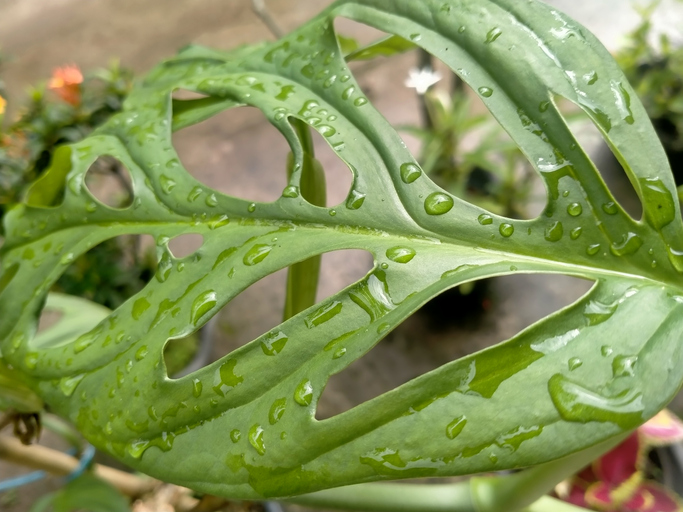
Monstera adansonii loves warm, humid environments. You can mimic these conditions in your home without turning it into a greenhouse.
You can start by placing your pots in the early morning sun for maximum light. As the day proceeds, you can shift your plant to a well-lit room that receives indirect sunlight so as not to scorch it.
The Monstera adansonii thrives in high humidity and loves moisture. You can mimic these conditions by frequently misting the plant, keeping it near a humidifier, or placing it above a pebble water tray.
As a rule of thumb, you should remember that the Swiss cheese plant requires between 60%-90% humidity for ideal growth.
Fertilizer
Fertiliers are crucial for Monstera adansonii care. The plant only requires extra nutrition during the growing season, so you should fertilize it during spring and summer.
Fertilizing is not required during the winter and fall months since there’s no promising growth to facilitate.
However, not fertilizing your Swiss cheese vine during summers can be detrimental to plant health and might result in yellow leaves.
You can use a standard NPK fertilizer with a 20:20:20 ratio. Always use it at half strength, or purchase a slow-release fertilizer to prevent the roots from burning.
Gardeners typically prefer liquid formulations since they’re easy to dilute and safer for the plant.
Soil Mix Recommendations