

People often get confused when differentiating a Rhaphidophora pertusa from a Monstera Deliciosa. Some even find them identical. Even though they share the same family, class and order, the genus is different.
This guide will help you differentiate between the two plants and determine:
- Their characteristics
- Their origins
- Similarities and differences between them
Rhaphidophora Pertusa Origin

This beautiful yet rare climbing plant is native to tropical Asia. Rhaphidophora Pertusa has irregular, split leaves with large holes which is why people often confuse it for a Monstera plant.
It occurs in the Andaman Islands, India, Sri Lanka, Bangladesh, Maldives, Myanmar, and Thailand.
Is Rhaphidophora Pertusa the Same As Rhaphidophora Tetrasperma?
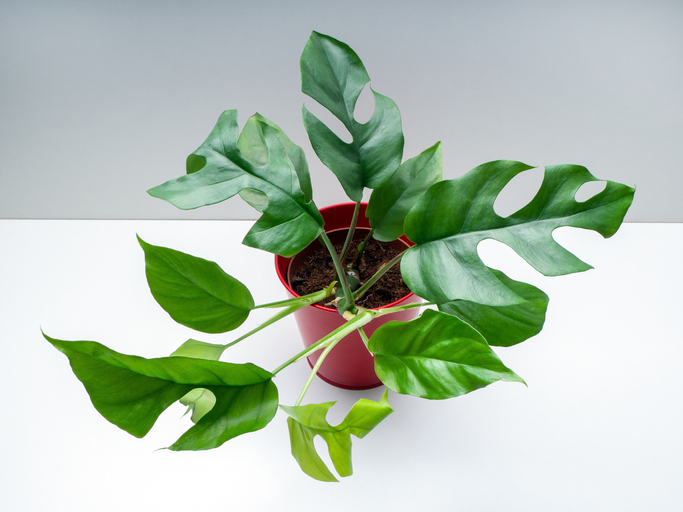
Compared to Tetrasperma’s oval to oval-lanced shaped leaves, Pertusa has rounded-oval to oval-oblong leaves. Pertusa is also leafier than Rhaphidophora Tetrasperma.
Furthermore, Pertusa has thicker stems and it thrives in the wild. It has leaves with irregular holes and splits that often extend to near the leaf margin.
Rhaphidophora Tetrasperma, on the other hand, has thinner stems and it doesn’t grow too well in the wild. The leaves of this plant have deep splits with rare rhombic holes near the midrib.
Rhaphidophora Tetrasperma is nicknamed “Mini Monstera” mainly because of the size of its leaves. Monstera leaves are known to mature to very large sizes, typically many feet long and wide.
While the former’s leaves also mature and get larger with fenestration, they never grow nearly as big. Rhaphidophora Pertusa, on the other hand, has the largest mature leaves of the genus. However, it still cannot be compared to the size of a mature Monstera plant leaf.
Monstera Deliciosa Origin
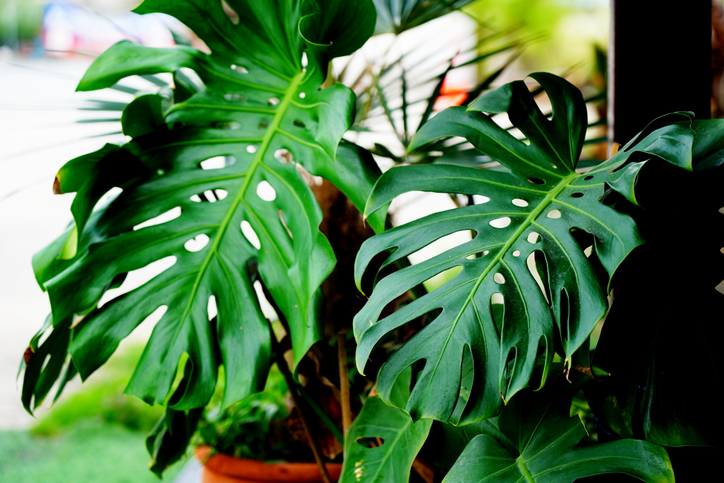
Found in Southern Mexico, this climbing plant is also found in tropical climates like Hawaii. Known as the Swiss cheese plant due to its heart-shaped leaves, Monstera Deliciosa can also be grown indoors.
Both these plants belong to the same “Araceae family.”
Is Rhaphidophora a type of Monstera?
Similarities
They Are Toxic
Monstera plants are toxic to both humans and animals. Rhaphidophora Pertusa plants are also toxic to humans, cats, dogs, rabbits, etc. mainly because of their needle-like insoluble calcium oxalate. This chemical results in oral irritation, swelling, redness, drooling, swallowing difficulties, etc.
They Suffer from Leggy Growth Without Sufficient Sunlight
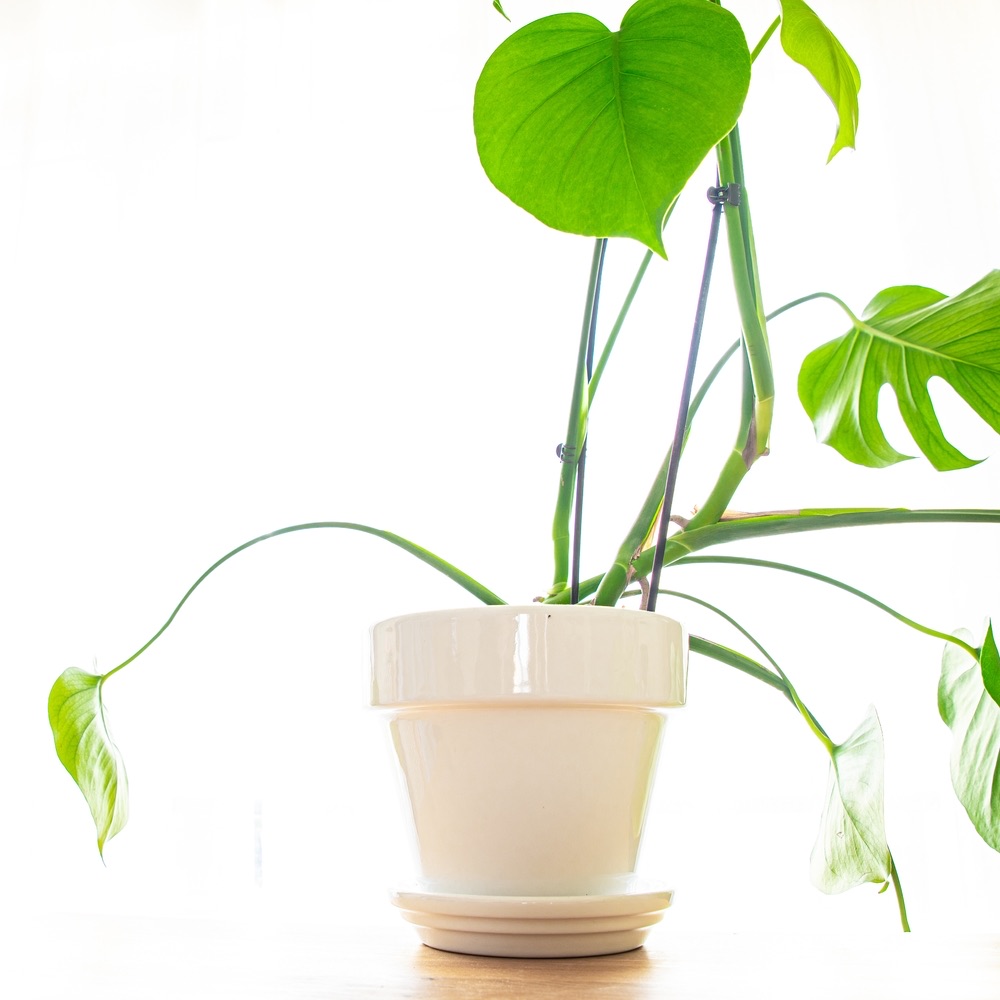
A Monstera plant becomes leggy if it doesn’t get enough light. As a result, it may become sparse and elongated. A Rhaphidophora Pertusa has a petite foliage in the absence of adequate sunlight.
Furthermore, both Pertusa and R Tetrasperma lose their original leaf shape when they get too much direct sunlight. Direct sunlight leads to transpiration, turning the plants crispy and dry. Here are some additional signs to tell if your plant has lost its required moisture:
- Loss of variegation and color from the leaves
- Curled leaves
Hence, it’s important to place these plants at a location that receives moderate indirect light every day.
They’re Moisture Loving Plants
Soil constitutes a huge proportion of plant food for both plants. The best potting mix for Rhaphidophora Pertusa should be light, aerated and organic rich.
Monstera Deliciosa requires a moist, acidic soil mix with a pH between 5.5 and 6.5. The soil mix should include peat moss or coco hair, perlite and bark fines.
However, too much moisture can result in root rot. They both take assistance from their aerial roots and the moisture helps them drain well.
They Have Origins in Warm Regions
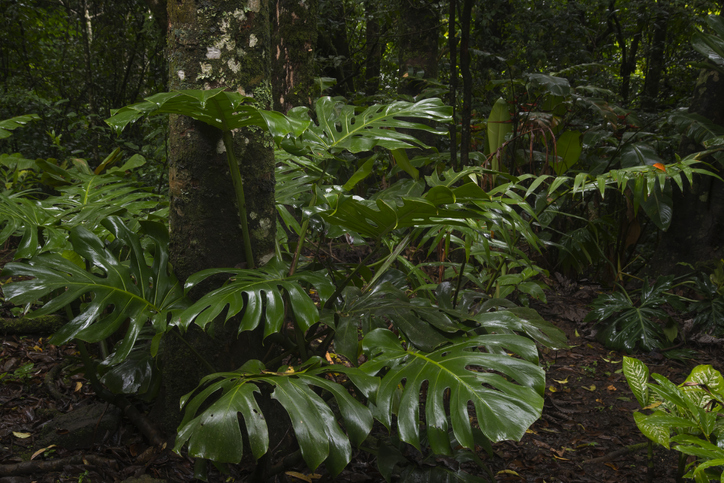
This means they both thrive in bright indirect light. The best way to expose them to bright indirect light is by installing a shade near your window.
They Have Similar Temperature Requirements
They grow best between 55 and 85 degrees Fahrenheit. Average household humidity should be 40% or more to allow the plants to thrive.
Differences
Rhaphidophora Pertusa Grows Quicker

While the plant isn’t relatively big, the growth is fast. In fact, it can quickly grow over 10 feet.
In the growing season, especially in the wild, it can even grow up to 49 feet. Monstera Deliciosa, on the other hand, is relatively big but it shows slow growth.
Rhaphidophora Pertusa Does Not Necessarily Require a Fertilizer to Grow
Typically, the plant does not require much fertilizer for growth. It can develop even without it. However, occasionally fertilizing the soil with a high-nitrogen fertilizer should be conducive to its growth.
Make sure to cut back in winter and fall. A Monstera Deliciosa Plant requires a balanced liquid fertilizer for growth.
Monstera Deliciosa Does Not Require Frequent Repotting

Due to the slow growth of the plant, frequent repotting isn’t required. Pertusa may require more repotting due to its fast-growing features.
They Require Different Care
Both these plants are very different in their needs. Hence, their growth also depends on fulfilling those distinct needs.
As dictated previously, Rhaphidophora plants grow faster compared to a Monstera Deliciosa plant, which means that the latter requires greater care. Nonetheless, both plants require a consistent watering routine as overwatering can cause root rot.
Treating Spider Mites
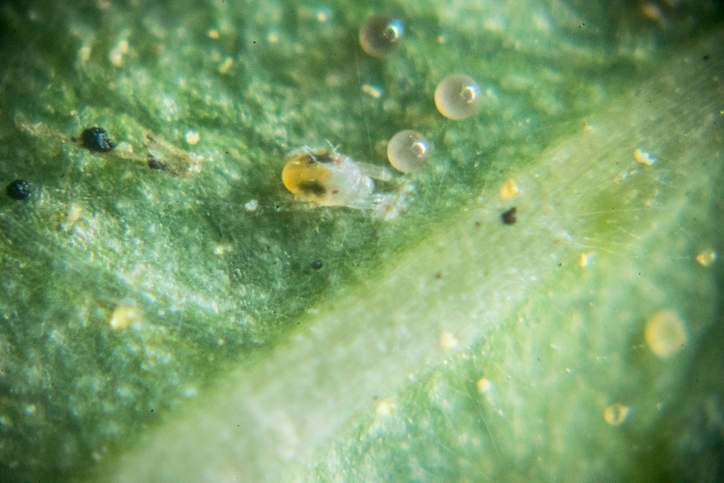
When treating these mites, understanding what conditions they thrive in is of utmost importance. Spider mites appear in winter more often since they enjoy dry environments.
The best way to prevent them from infesting your home is by decreasing the temperature and increasing humidity. However, they often tend to hibernate, so this may just slow them down for a while.
If your plant is already infested, you may have to treat it completely. For a Monstera Deliciosa, this process is relatively easier. You can put it into a shower or wipe its leaves with rubbing alcohol to kill the remaining mites.
Neem oil is also quite effective against them. This mixture spray helps you coat the plant, reach every nook and cranny and kill any spider mites that come its way.
Make sure not to use a chemical insecticide as it may worsen the issue. Interestingly, you can also use a biological control method by purchasing predatory ladybugs or mites and releasing them in your home. However, it may not suit your preference.
The predatory mites can take a couple of weeks to do their work. But once they’re done, you can expect them to die off naturally since their food source will be exhausted.
Treating Thrips
It’s best to treat thrips early as it will help minimize long term damage to your plants. If you have any new plants in the house, make sure to inspect them thoroughly and quarantine them for at least two weeks before you place them in the space space with the rest of the houseplants.
Thrips have a tendency to congregate together which means you can easily remove heavily infested leaves. This way, the rest of the plant can be protected against them. Pruning your plants upon noticing signs of pests will certainly do the job.
Thrips can also be knocked off by an intense burst of water. However, you’ll want to use your garden hose outside and far away from other plants.
Make sure to inspect the backside of the leaf too as thrips tend to hide there. This should be a good primary step before you use neem oil or apply a natural insecticide.
Benefits of Neem Oil
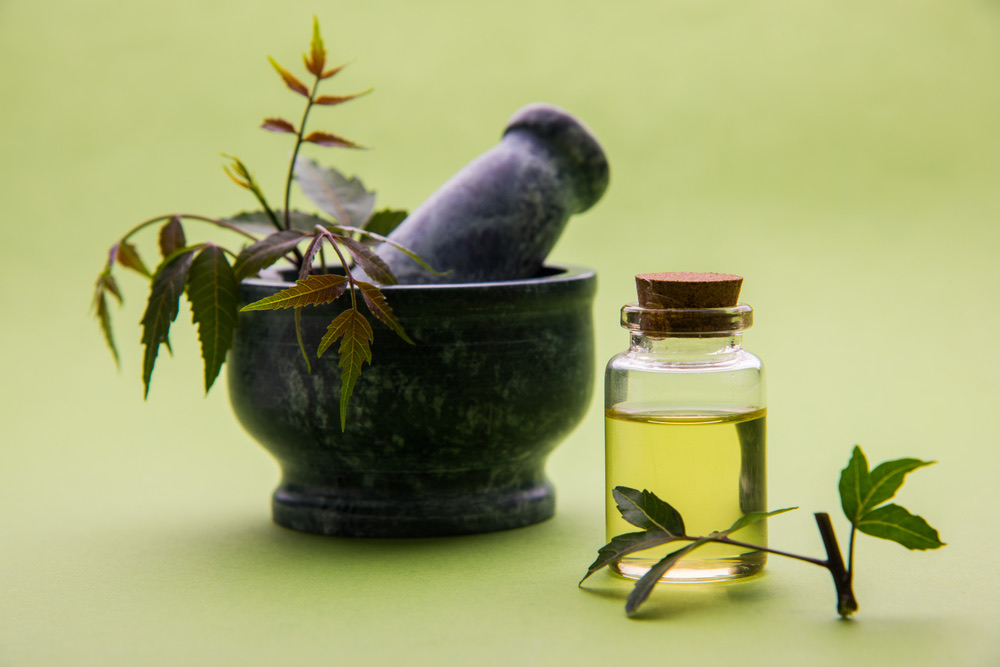
Whether you treat thrips or mites, this oil can come in handy every time. Here are some of its most sought-after benefits.
- It’s easy to apply
- It doesn’t accumulate in the soil
- It’s environmentally friendly
- It’s safe for butterflies and bees
- It’s safe for humans and pets
It’s super effective as a pesticide for many species of insects that eat plants
Tips to Grow a Monstera Deliciosa Plant
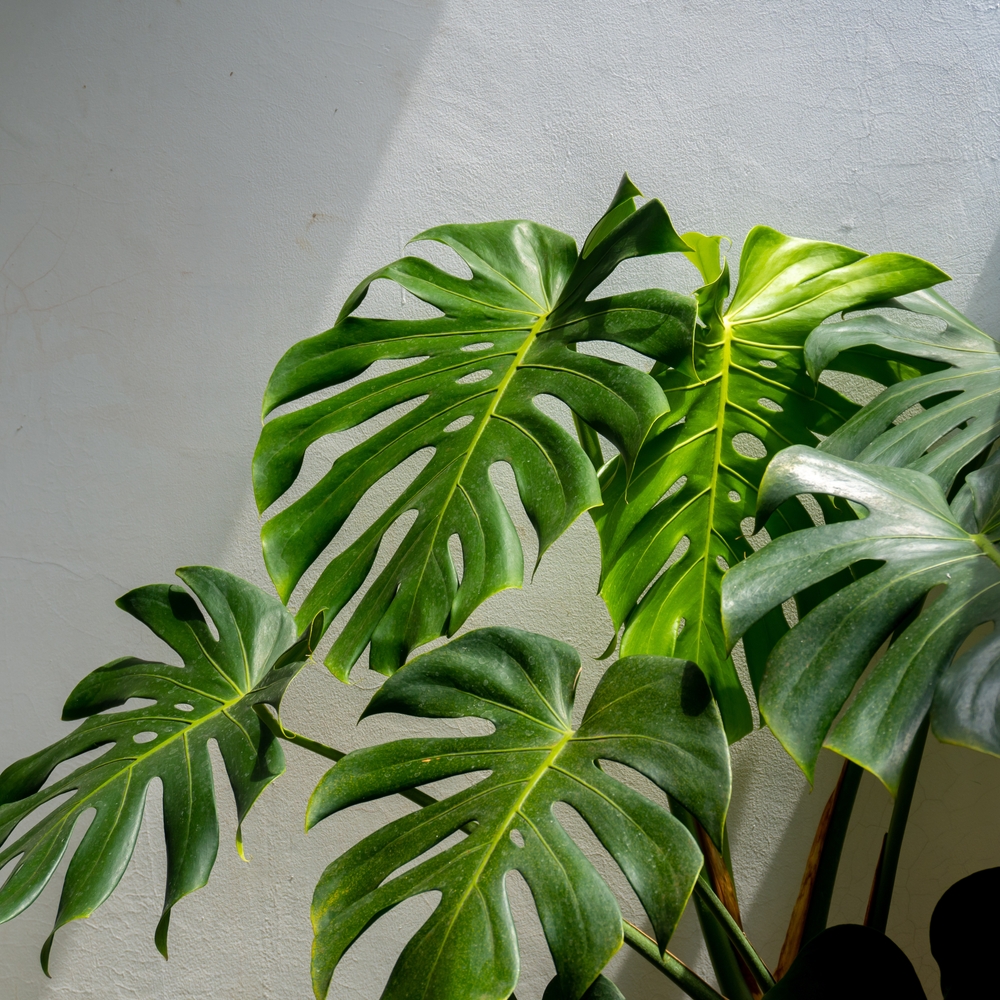
Protect the plant from intense light. Spring through fall is the peak growth season for this plant which is why it can only handle bright indirect sunlight. However, too little light may also not be conducive to its growth.
Make sure to remove excess water from the pot to avoid root rot. While it enjoys the occasional watering spree during its active growing season, you want to reduce the watering cycle during winter.
Mist the plant and moss pole daily during active growth. You can also simulate a rainforest bath by wiping leaves with warm water every week.
Feeding them through a nutrient-rich fertilizer in the growing season is essential to their health. Furthermore, the micronutrients also keep the foliage looking beautiful.
Use a moist sphagnum moss when growing the plant indoors. It isn’t only light but it also holds moisture well and doesn’t get soggy. This means, there are minimal chances of root rot.
While they do well in average home temperatures, make sure to keep them away for air conditioning and heating vents.
If aerial roots and vines get unattractive or unruly, you can always prune them back. To avoid its stunted growth, make sure to follow a proper stem cutting routine.
Remove only damaged or dead stems and leaves. Healthy aerial roots ensure adequate support and also help absorb moisture from the air.
Don’t repot the plant too often. If the root begins emerging through drainage holes, shift the Monstera Deliciosa to a one size larger pot.
Make sure to use a potting mix that’s fast-draining and designed specifically for container plants. It helps reduce the shock of transplant.